

FishtownFish wrapped around the rod of AsclepiusMedicine
Philadelphia Primary Care
Articles
Digital Health Literacy
Cut through health misinformation
Symptoms
What your body is telling you
Treatments
Protocols, prescriptions, therapies
Longevity
Medicine 3.0 strategies
Heart Health & Risk
Protect your heart & vessels
Metabolism
Insulin, blood sugar, weight
Hormones
TRT, thyroid, menopause, andropause
Performance
VO2 max, muscle, sleep, gut
Playbooks
Step-by-step frameworks
About
Meet Dr. Ash
Your Physician
GER·O·SPAN
Our Clinical Framework
What People Say
124 patient reviews across 6 platforms
Pricing & Membership
Transparent membership pricing
FAQ
Common Questions
Tell Dr. Ash
Tired of "Normal" Labs? Why Metabolic Health is the Missing Piece of Your Performance
Fishtown Medicine•9 min read
4.96 (124)

Tired of "Normal" Labs? Why Metabolic Health is the Missing Piece of Your Performance

Ashvin Vijayakumar MD

Medically Reviewed

Ashvin Vijayakumar MD•Updated January 22, 2026
On This Page
  • Why "Normal" Labs Are Often a Warning Sign
  • What Is Metabolic Health, Really?
  • The Energy Problem: Mitochondrial Dysfunction
  • What Is Insulin Resistance and Why Do Standard Labs Miss It?
  • The Glucose Blind Spot
  • How Does Fishtown Medicine Approach Metabolic Health?
  • Standard Care vs. Fishtown Medicine
  • Continuous Glucose Monitoring (CGM) for Non-Diabetics
  • Zone 2 Training: The Mitochondrial Prescription
  • How Do I Know If I Am Metabolically Flexible?
  • Guidance from the Clinic
  • What Are the Treatment Options for Insulin Resistance?
  • Actionable Steps in Philly
  • Common Questions
  • What is the difference between an endocrinologist and a metabolic health doctor?
  • Can I use a CGM if I do not have diabetes?
  • What is a "normal" versus "optimal" HOMA-IR score?
  • Does insurance cover metabolic testing?
  • How long does it take to reverse insulin resistance?
  • Is GLP-1 medication right for me?
  • What lab markers do you check for metabolic health?
  • Can stress cause insulin resistance?
  • Deep Questions
  • Why is fasting insulin a better early marker than A1c?
  • How does visceral fat differ from subcutaneous fat?
  • What is the role of liver fat in metabolic dysfunction?
  • Can resistance training reverse insulin resistance on its own?
  • How does sleep affect blood sugar and insulin?
  • What is metabolic flexibility, and how do I train it?
  • How are ApoB and metabolic health connected?
  • What is the role of dietary fiber in metabolic health?
  • Can intermittent fasting help insulin resistance?
  • How does alcohol affect metabolic health?
  • What is the link between metabolic health and cancer risk?
  • Does Metformin help non-diabetics with longevity?
  • How does the gut microbiome affect insulin resistance?
  • What is the difference between Type 1, Type 2, and Type 3 diabetes?
  • How often should I get advanced metabolic labs?
  • ✦Key Takeaways
  • Scientific References
  • Related at Fishtown Medicine

Get a preventive doctor that knows you.

Consult Dr. Ash
TL;DR30-second take

Most standard labs miss insulin resistance for years because your pancreas works overtime to keep glucose "normal." We measure fasting insulin and HOMA-IR to catch the problem a decade before A1C changes. A Continuous Glucose Monitor (CGM) shows how your specific meals, sleep, and stress affect your blood sugar as it happens. Zone 2 training is our first-line prescription because it rebuilds mitochondrial efficiency and reverses early insulin resistance at the source. The goal is a metabolism that performs well into your 80s, rather than one that barely clears today's disease threshold.

Why "Normal" Labs Are Often a Warning Sign

Normal on a lab report is a statistical average, and the population it averages is mostly metabolically sick. That is how you can be told you are fine at every visit for years and then hear a Type 2 diabetes diagnosis one morning with no warning in between. What I want for you is a metabolism that performs, rather than one that barely clears the line where disease starts.

You may recognize yourself here if you live in Philadelphia. You run a team in Center City, write code in Northern Liberties, or run your own shop in Fishtown. You work hard and you always have, but the edge you used to count on has gone missing. The 3:00 PM crash shows up on schedule, your thinking turns fuzzy by afternoon, and you've been in the gym 4 days a week for months while your body composition refuses to move.

So you bring it to your primary care doctor at one of the big health systems. They run a basic panel, look at your fasting glucose, and tell you everything looks normal and you're probably just stressed.

That word "normal" carries less than it sounds like it carries. It describes the middle of a population that gets metabolically sicker every year, so the bar keeps dropping underneath you. In the standard model you count as healthy right up until the day someone hands you a diagnosis.

I've spent years caring for people at the far end of this, after the small early signals went unread for a long time. Insulin resistance that nobody manages for decades wears on the heart, brain, and kidneys, and the repair work gets harder the longer it has been running. That is why I would rather see what your body is doing now than 5 years from now.

At Fishtown Medicine we practice Medicine 3.0, which means keeping your cellular machinery running well long before anything has the chance to settle in and become a disease.

Conceptual visualization of cellular mitochondrial machinery as a precision engine

What Is Metabolic Health, Really?

Metabolic health is how well your body makes energy and how well it uses what it makes. That single system underwrites how clearly you think, how long you can work before you are wiped out, and how well you hold up against chronic disease, which puts it well past what you weigh or what your blood sugar reads on a given morning.

When it's working, your blood sugar holds steady through the day, your insulin stays low, the mitochondria in your cells (the tiny power plants every cell runs on) do their job efficiently, and you move between burning sugar and burning fat for fuel without ever noticing the handoff.

Roughly 88% of American adults are metabolically unhealthy, which is most of the people in any room you walk into. The signs rarely announce themselves, and these are the ones I see most:

  • Subtle weight gain around the midsection (visceral fat).
  • Energy crashes after meals.
  • Brain fog and trouble focusing.
  • Joint pain or low-grade inflammation.

The Energy Problem: Mitochondrial Dysfunction

All of it comes back to your mitochondria, the organelles that make ATP, the molecule your body spends as energy. Flood them with glucose and insulin around the clock and the engines get gummed up, so they throw off more free radicals (cellular exhaust) than usable fuel. You end up worn out while eating plenty of calories, which is what it feels like to be overfed and underpowered.

What Is Insulin Resistance and Why Do Standard Labs Miss It?

Insulin resistance is the root of most modern chronic disease, and a standard panel can't see it. By the time your fasting glucose is high enough to earn you a diagnosis, your pancreas has been compensating for a decade or more.

What drives poor metabolic health more than anything else is insulin resistance, meaning your cells have stopped responding well to insulin. Standard labs measure only the sugar in your blood, and your body is smart enough to protect that number, so the pancreas pours out more and more insulin to hold glucose in the "normal" range. That holds the line for years, until the system gives out.

The Glucose Blind Spot

The number your doctor reads is hemoglobin A1c, a 3-month average of your blood sugar. Under 5.7% and you get told you are fine.

  • What that misses: your pancreas may be working 5 times harder than it should to hold that A1c at 5.5.
  • What it costs you: high insulin drives inflammation, promotes fat storage, raises blood pressure, and feeds the growth pathways that cancer cells use.

Once blood sugar climbs high enough to flag pre-diabetes, your arteries and organs have already been living in that environment for years. A full metabolic workup measures your fasting insulin and uses it to calculate your HOMA-IR score (Homeostatic Model Assessment of Insulin Resistance), which tells us how hard your pancreas is working long before anything breaks.
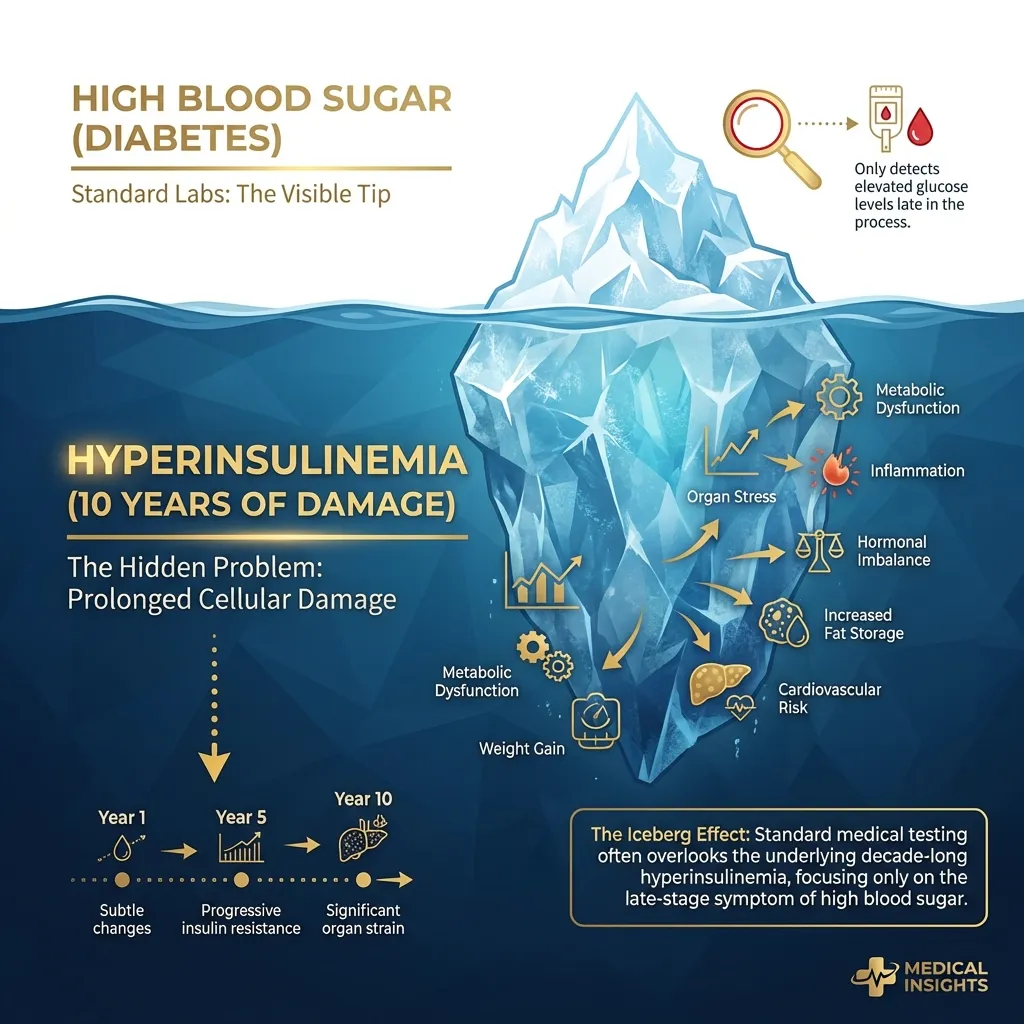
The Insulin Resistance Iceberg shows how standard labs only detect the visible tip while missing years of underlying damage

How Does Fishtown Medicine Approach Metabolic Health?

We trade "wait and see" for measurement you can act on. That means Continuous Glucose Monitors (CGMs), fasting insulin followed over time, and structured Zone 2 training, so we find the problem while it is still small and fixable.

Medicine 3.0 is the frame behind all of it. The question stops being whether you have a disease today and becomes how we extend your healthspan, and answering that takes better tools and better metrics than standard care carries.

Standard Care vs. Fishtown Medicine

ParameterStandard of CareFishtown Medicine
Primary MetricHbA1c and Fasting GlucoseFasting Insulin, HOMA-IR, LP-IR
ToolAnnual blood drawContinuous Glucose Monitor (CGM)
Exercise Advice"Exercise 150 minutes a week"Zone 2 Training at a prescribed dose
Nutrition"Eat less, move more"Precision Nutrition and protein leverage
GoalManage diabetesPrevent insulin resistance

Continuous Glucose Monitoring (CGM) for Non-Diabetics

A Continuous Glucose Monitor is among the most useful tools we have, and standard medicine hands it out only to people who already have diabetes. We use it as an optimization tool, because two people can eat the same breakfast and their bodies will do very different things with it.

Fishtown Medicine

A 90-minute conversation with Dr. Ash. A written plan you can actually follow.

Start your intake

A "healthy" bowl of oatmeal can push your blood sugar into a range that drives inflammation and leaves you tired for the rest of the morning, while your neighbor eats the same bowl and sails through. 2 weeks of CGM data maps how your own body answers food, sleep, and stress. We get to see what the 2:00 PM snack did to you, and what the hard Zoom meeting right after it did.
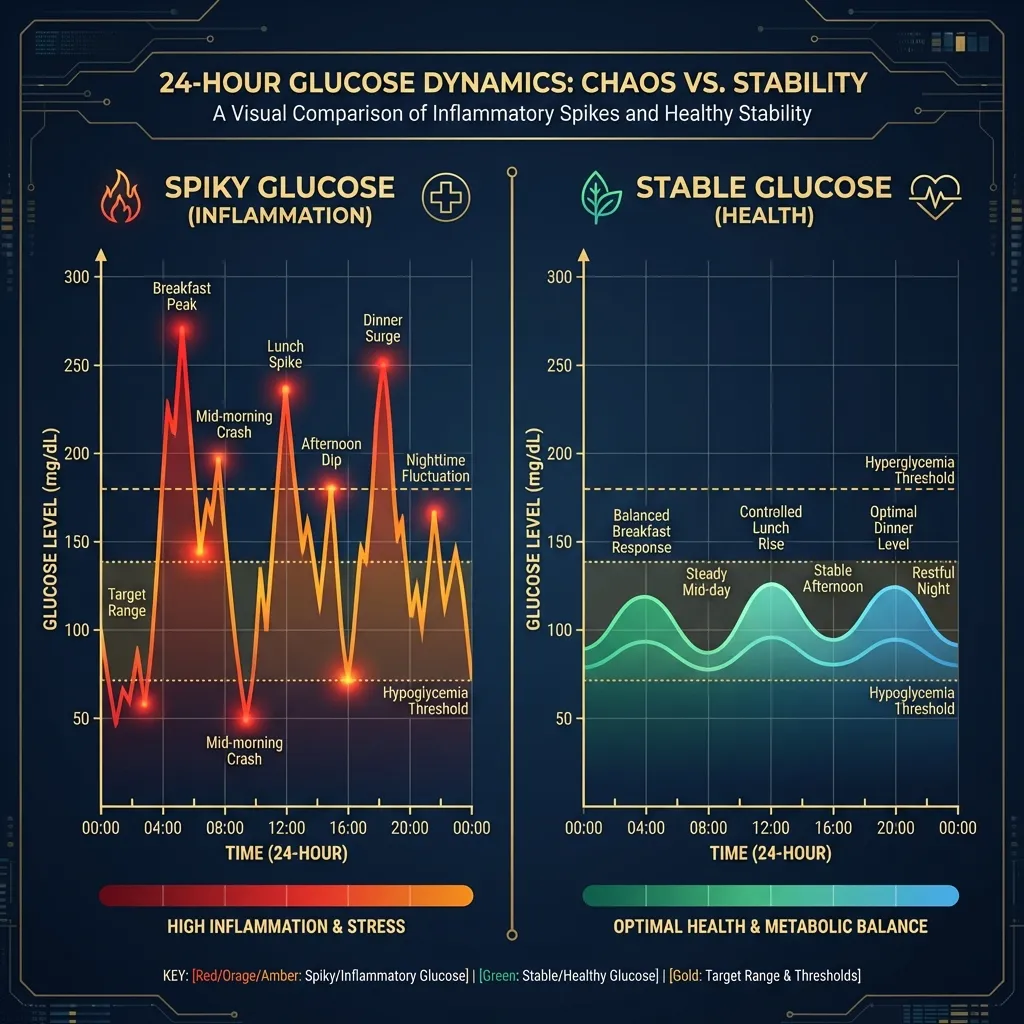
24-hour glucose comparison showing spiky inflammatory patterns versus stable healthy metabolism

Zone 2 Training: The Mitochondrial Prescription

Rather than telling you to exercise more, we write you a dose of Zone 2 training, steady cardio held at a pace where you can still talk in full sentences. Zone 2 works on mitochondrial efficiency and teaches your body to burn fat for fuel instead of depending on sugar. Of everything I prescribe, it is the most effective intervention I have seen for reversing early insulin resistance.

How Do I Know If I Am Metabolically Flexible?

You can usually feel metabolic inflexibility before a single tube of blood gets drawn. It shows up as fatigue after meals, the "hangry" feeling when a meal runs late, and belly weight that stays put no matter how consistent your training is.

You cannot optimize what you never measure, though a few plain questions will tell you plenty before we run anything.

Infographic showing warning signs of metabolic dysfunction including afternoon crashes, hunger every 4 hours, waistline increase, and brain fog

  • Do you get hangry? If 4 to 5 hours without food leaves you irritable or shaky, your body is probably running on sugar and asking for the next dose.
  • Do you need caffeine to function? Energy that vanishes the moment the stimulant wears off usually points to a metabolic deficit underneath.
  • Do you carry weight in the belly? Visceral fat, the deep fat packed around your organs, is hormonally active and keeps inflammation running.

Guidance from the Clinic

Dr. Ash
"A 'normal' lab result in America is not a badge of health. It is the middle of a sick bell curve. I am not aiming for the middle. I am aiming for the metabolic flexibility that keeps your mind sharp and your engine running well into your 80s."

I hear it almost every week. "Why did my other doctor say my labs were fine?" When we run a fasting insulin, the pancreas is often screaming, pumping out 4 times the level a healthy 37-year-old should need. The standard system waits until the house is flooded before it goes looking for the leak.

We play a different game here. The CGM works as a compass for your longevity, and Zone 2 is a prescription for your mitochondria. We fix the roof while the sun is shining because once the shingles are gone, the damage compounds. I have your back.

What Are the Treatment Options for Insulin Resistance?

Treating insulin resistance is rarely 1 tool. We use a multi-pronged approach matched to your physiology and goals.

InterventionMechanismEfficacy
Zone 2 TrainingIncreases mitochondrial density and fat oxidation.High. The foundation.
MetforminImproves insulin sensitivity and activates AMPK.Moderate. The gold standard drug.
GLP-1 AgonistsSlow gastric emptying, raise insulin sensitivity.Very high. Ozempic and Mounjaro live here.
BerberineNatural AMPK activator.Mild. Sometimes called "poor mans Metformin."

Actionable Steps in Philly

  1. Get a full baseline. Ask your doctor for a fasting insulin and HOMA-IR alongside glucose. If the practice will not order it, we can.
  2. Test your engine. Consider a VO2 Max test for a clear read on cardiorespiratory fitness.
  3. Audit your plate. Use protein leverage, meaning protein at every meal first, to stabilize hunger and protect muscle mass.

At Fishtown Medicine, we run a Metabolic Audit as part of our core membership. We pair advanced biomarker data with your wearable tracking to build a plan that fits your Philly life.

Ready to stop settling for "normal"?

Book Your Warm Invitation Call Here

✦

Key Takeaways

  1. Fasting insulin and HOMA-IR catch insulin resistance 5 to 10 years before A1c changes, which is why we use them as primary markers rather than glucose alone.
  2. Roughly 88% of American adults are metabolically unhealthy, and the signs (afternoon crashes, belly weight, brain fog) often appear years before any standard lab flags a problem.
  3. Zone 2 training is our first-line prescription because it rebuilds mitochondrial density and teaches the body to burn fat for fuel, directly reversing early insulin resistance.
  4. A CGM reveals individual responses to food, sleep, and stress that no annual blood draw can capture, making it a compass rather than a disease tool.
  5. Metabolic health and cardiovascular health are two sides of the same coin: treating insulin resistance often lowers ApoB, blood pressure, and inflammation without any additional intervention.

Scientific References

  1. Reaven GM. "Banting lecture 1988: Role of insulin resistance in human disease." Diabetes. 1988.
  2. Petersen KF, Shulman GI. "Mechanisms of insulin action and insulin resistance." Physiol Rev. 2018.
  3. San-Millan I, Brooks GA. "Assessment of metabolic flexibility by means of measuring blood lactate, fat, and carbohydrate oxidation responses to exercise in professional endurance athletes and less-fit individuals." Sports Med. 2018.
  4. Esposito K, et al. "Effect of a Mediterranean-style diet on endothelial dysfunction and markers of vascular inflammation in the metabolic syndrome." JAMA. 2004.
  5. Wilding JPH, et al. "Once-weekly semaglutide in adults with overweight or obesity." NEJM. 2021.

Related at Fishtown Medicine

  • Metabolic Health: the foundation - insulin resistance, the silent driver of most chronic disease
  • Medical Weight Loss - evidence-based, durable weight loss including GLP-1 therapy
  • Ozempic vs Metformin - how to pick between the two most-asked-about metabolic medications
  • Fasting Protocols - time-restricted eating, prolonged fasting, and what the evidence says
  • Metformin and longevity - the off-label longevity case for metformin
Medical Disclaimer: This resource provides clinical context for educational purposes. In the world of Precision Medicine, there is no "one size fits all". The right protocol must be matched to your unique lab work, physiology, and goals. Consult Dr. Ash to determine if this approach is right for you, particularly if you have chronic health conditions or are taking prescription medications.
Ashvin Vijayakumar MD (Dr. Ash)

Fishtown Medicine | Articles

2418 E York St, Philadelphia, PA 19125·(267) 360-7927·hello@fishtownmedicine.com·HSA/FSA Eligible

Frequently Asked Questions

Common Questions

An endocrinologist usually treats diagnosed conditions like Type 1 diabetes or thyroid disease, often with medication. A metabolic health doctor focuses on optimization of your energy systems to prevent those diseases from showing up, mostly through advanced labs and lifestyle work. The two roles can overlap, but the framing is different.
Yes, you can use a CGM even if you do not have diabetes. We use them as an optimization tool because seeing your own blood sugar climb after a specific meal is more powerful than any lecture from a doctor. 2 to 4 weeks of data is usually enough to find your personal patterns.
A "normal" HOMA-IR is often quoted as under 2.0, but optimal metabolic health is a HOMA-IR under 1.0. If your score falls between 1.5 and 2.0, you are already showing early insulin resistance even though most labs would call it normal. We treat the trend rather than a single cutoff.
Most insurance plans cover basic glucose and A1c, but they often deny advanced testing like fasting insulin, ApoB, or LP-IR unless you are already sick. That is 1 reason we run a membership model. We can order what is medically right without an insurance gatekeeper.
Most people see meaningful improvement in fasting insulin and HOMA-IR within 8 to 12 weeks of structured training, protein-forward eating, and better sleep. Full reversal in someone with longstanding insulin resistance can take 6 to 12 months. The earlier we catch it, the faster things change.
GLP-1 medications like semaglutide and tirzepatide can be the right tool for the right patient, particularly when insulin resistance is significant or weight loss has stalled despite consistent effort. We do not prescribe them as a first reflex. We pair them with strength training, protein targets, and a clear off-ramp plan.
We typically check fasting insulin, glucose, HOMA-IR, A1c, ApoB, triglycerides, HDL, ALT, GGT, uric acid, hsCRP, and sometimes LP-IR or an oral glucose tolerance test. Each marker covers a different angle of the same engine. Together they paint a full picture.
Yes, chronic stress can drive insulin resistance, even without weight gain. High cortisol raises blood sugar, blunts insulin signaling, and pushes fat storage into the belly. Sleep loss, work stress, and overtraining all stack onto the same circuit.

Deep-Dive Questions

Fasting insulin reflects how hard your pancreas is working right now, while A1c is a 3-month average of blood sugar. Insulin rises long before glucose does, so it catches the problem 5 to 10 years earlier. We use both, but fasting insulin is the early-warning siren.
Visceral fat sits deep around organs like the liver and pancreas, while subcutaneous fat sits just under the skin. Visceral fat is hormonally active and drives inflammation, insulin resistance, and high triglycerides. You can look lean from the outside and still carry harmful visceral fat, which is why a DEXA scan is more useful than a scale.
Liver fat (called metabolic dysfunction-associated steatotic liver disease, or MASLD) is 1 of the earliest signs of insulin resistance. Even mild fat in the liver disrupts insulin clearance and pushes triglycerides higher. We screen with liver enzymes, GGT, and sometimes a FibroScan or MRI elastography for a closer look.
Resistance training, particularly when paired with adequate protein, is 1 of the most powerful tools for reversing insulin resistance. Muscle is the largest sink for blood glucose. Building 5 to 10 pounds of new muscle improves insulin sensitivity in nearly every patient I have followed. We pair it with Zone 2 cardio for the full effect.
Sleep loss raises insulin resistance within a single night. 1 night of 4 hours of sleep can drop insulin sensitivity by 20 to 30% in healthy adults. Chronic short sleep also raises ghrelin (a hunger hormone) and lowers leptin (a satiety hormone), which makes overeating easier. Fixing sleep is often the highest-yield first move.
Metabolic flexibility is your bodys ability to switch between burning sugar and burning fat for fuel based on what is available. You train it with Zone 2 cardio, time-restricted eating in a sensible window, and avoiding constant snacking. A CGM and HRV (heart rate variability) data make the progress visible.
ApoB (Apolipoprotein B, a marker of every artery-clogging cholesterol particle) tracks closely with insulin resistance. High insulin drives the liver to make more triglyceride-rich VLDL particles, which raises ApoB. Treating insulin resistance often lowers ApoB without a single statin. We measure both because they are 2 sides of the same coin.
Fiber slows glucose absorption, feeds gut bacteria that produce short-chain fatty acids (compounds that improve insulin sensitivity), and supports a stable blood sugar curve. Most adults eat under 15 grams a day. We aim for 30 to 40 grams from whole food rather than a powder.
Time-restricted eating, often in a 10 to 12 hour window, can lower fasting insulin and improve metabolic flexibility for many people. Intensive long fasts are not a magic bullet, particularly for women in their reproductive years where they can disrupt cycles. We personalize the window to your physiology and lifestyle.
Alcohol disrupts sleep, drives liver fat, blunts fat oxidation overnight, and adds quick calories without nutrients. More than 4 drinks a week reliably raises liver enzymes and triglycerides in most patients I follow. A 2 to 4 week pause often reveals how much it was holding you back.
Chronically high insulin and glucose support the growth of several common cancers, including breast, colon, and pancreatic cancer. Insulin acts as a growth signal for cells, including ones we do not want growing. Tight metabolic health is 1 of the most underrated cancer-prevention strategies we have.
Metformin is a leading candidate in longevity research. It activates AMPK (a cellular energy sensor) and may extend healthspan in some animal studies. The human longevity data are still emerging, with the TAME trial in progress. We discuss it case by case, particularly for patients with metabolic risk and a family history of cardiovascular disease.
The gut microbiome (the trillions of bacteria in your intestines) influences how you digest food, produce short-chain fatty acids, and regulate inflammation. Low-diversity microbiomes correlate with insulin resistance. We support it with fiber, fermented foods, and avoiding unnecessary antibiotics rather than expensive boutique stool tests for everyone.
Type 1 diabetes is an autoimmune condition where the pancreas stops making insulin. Type 2 diabetes is mostly insulin resistance with eventual pancreatic burnout. "Type 3" is an informal term for Alzheimer's disease, which has strong overlap with insulin resistance in the brain. The same lifestyle work that protects the body also protects the brain.
For most patients, we run a full advanced metabolic panel at baseline and then every 6 to 12 months once stable. If we are actively reversing insulin resistance or starting medication, we recheck at 3 months. The point is to watch the trend, not chase a single result.

Ready when you are

Start your intake

Dr. Ash reads every intake himself, and answers questions personally - usually within a few hours.

Related Intelligence

Precision Nutrition Philadelphia | Medicine 3.0 Protein Leverage

Precision Nutrition Philadelphia | Medicine 3.0 Protein Leverage

Stop chasing weight loss. Optimize for muscle mass and metabolic flexibility with Medicine 3.0 nutrition. Led by Ashvin Vijayakumar MD.

Read Deep Dive
Healthspan vs Lifespan: Why Living Longer Is Not Enough | Philadelphia

Healthspan vs Lifespan: Why Living Longer Is Not Enough | Philadelphia

Americans live to about 78 but spend the last 12 years sick and dependent. A Philadelphia primary care practice on why healthspan is the better metric.

Read Deep Dive
Body Composition Optimization Philadelphia | HAES Medicine 3.0

Body Composition Optimization Philadelphia | HAES Medicine 3.0

Move beyond the scale. We focus on muscle mass and metabolic health using DEXA scans, in a HAES-aligned, Medicine 3.0 practice in Philadelphia.

Read Deep Dive

New patients

Talk it through with Dr. Ash.

Share the number or outcome you want to improve, and where you are starting from. Dr. Ash reads every intake personally.

HSA/FSA eligible
No initiation or cancellation fees
No copays
Tell Dr. Ash what’s going on →
FishtownFish wrapped around the rod of AsclepiusMedicine
Philadelphia Primary Care
2418 E York St, Philadelphia, PA 19125Primary care in PhiladelphiaHome visits in Greater PhiladelphiaPricing & MembershipGER·O·SPAN: our clinical frameworkDigital Health Literacy

Serving Fishtown · Northern Liberties · East Kensington · Olde Richmond · Port Richmond · Old City · Callowhill · Poplar · Center City · Center City West · Art Museum · Bella Vista · Chestnut Hill · Fairmount · Fitler Square · Graduate Hospital · Logan Square · Manayunk · Queen Village · Rittenhouse · Roxborough · Society Hill · Southwark · Bryn Mawr, PA · Gladwyne, PA · Villanova, PA · Wayne, PA · Cherry Hill, NJ · Haddonfield, NJ · Medford, NJ · Moorestown, NJ · Voorhees, NJ

Explore by topic

Women’s Health
  • Perimenopause
  • Menopause 3.0
  • PCOS
  • Fertility
Men’s Health
  • Testosterone (TRT)
  • Sleep Apnea & Low T
  • Andropause
  • Low Libido
Metabolic
  • Medical Weight Loss
  • Ozempic vs Metformin
  • Fasting Protocols
  • Visceral Fat
Cardiovascular
  • apoB & Heart Health
  • apoB vs LDL
  • Lp(a) Cholesterol
  • ED & Heart Risk
Longevity + Performance
  • Healthspan vs Lifespan
  • Biological Age
  • VO2 Max
  • Zone 2 Training
Supplements
  • Magnesium
  • Creatine
  • Omega-3
  • Foundational Stack
  • Supplement Guides
Care in Philadelphia +
Direct Primary Care in Philadelphia, PAConcierge Medicine in Philadelphia, PAConcierge vs DPC in Philadelphia, PALongevity Medicine in Philadelphia, PAPreventive Care in Philadelphia, PAExecutive Physical in Philadelphia, PAAnnual Physical in Philadelphia, PAHealthspan Optimization in Philadelphia, PAFunctional Medicine in Philadelphia, PASame-Day Sick Visits in Philadelphia, PATestosterone Replacement Therapy in Philadelphia, PAPerimenopause Care in Philadelphia, PAMenopause Care in Philadelphia, PAThyroid Treatment in Philadelphia, PAPCOS Care in Philadelphia, PAGLP-1 Weight Loss in Philadelphia, PAMetabolic Health in Philadelphia, PAHormone Optimization in Philadelphia, PAAdvanced Lipid Testing in Philadelphia, PAVO2 Max Testing in Philadelphia, PADEXA Scan in Philadelphia, PACGM in Philadelphia, PALong COVID Care in Philadelphia, PAChronic Fatigue Treatment in Philadelphia, PAPOTS Treatment in Philadelphia, PAMCAS Treatment in Philadelphia, PALyme Disease Care in Philadelphia, PABrain Fog Treatment in Philadelphia, PASleep Disorders Treatment in Philadelphia, PAStrep Throat Treatment in Philadelphia, PAUTI Treatment in Philadelphia, PASinus Infection Treatment in Philadelphia, PASTI Testing in Philadelphia, PATravel Medicine in Philadelphia, PAPre-Op Clearance in Philadelphia, PASports Club Medicine in Philadelphia, PA

Made it this far? You’re already most of the way there. let’s get started → Dr. Ash reads every word personally.

Content is for educational purposes only and does not constitute medical advice.

TermsPrivacyScope of PracticeClinical Independence