Fishtown Medicine Library
Heart Health & Risk
Protecting your most important engine.

Remnant Cholesterol: The Risk Hiding in Your Standard Panel
Remnant cholesterol is a causal heart risk you can calculate for free from a standard lipid panel, and it explains "normal LDL but still at risk." How to find it and what to do, from Fishtown Medicine in Philadelphia.
Read Full Guide
Should You Take a Daily Aspirin? What Changed
For most people without heart disease, daily aspirin is no longer recommended. What ASPREE and the modern trials showed, what the guidelines now say, and why people who have had a heart attack or stroke should keep taking it.

High Troponin and NT-proBNP: Reading Cardiac Markers
A high troponin on a longevity panel is not proof of a silent heart attack, and a normal NT-proBNP can mislead in obesity. Here is what these cardiac blood markers mean when you are not in the emergency room.

Do Statins Cause Diabetes?
Statins slightly raise diabetes risk, but the effect is small and concentrated in people already near diabetes, and the heart benefit outweighs it. What the Sattar, Preiss, and JUPITER analyses show, and what to do.

Ezetimibe (Zetia): The Simple LDL-Lowering Add-On
Ezetimibe (Zetia) blocks cholesterol absorption in the gut to lower LDL and apoB. What the IMPROVE-IT trial proved, how it pairs with statins and bempedoic acid, its near-placebo safety, and the limits of its modest benefit.

High Fibrinogen: What It Means for Your Heart
A high fibrinogen predicts heart risk but is not a treatment target. What the clotting-and-inflammation marker reflects, why genetics say it is a messenger not a cause, and how to respond, from Fishtown Medicine in Philadelphia.

GLP-1 Drugs and Heart Failure: What HFpEF Changes
GLP-1 drugs help one specific kind of heart failure, the obesity-driven HFpEF, and may not help another. What STEP-HFpEF and SUMMIT showed, why the type of heart failure matters, and how this differs from SGLT2 inhibitors.

Heart Disease in Women: Different, and Often Missed
Cardiovascular disease is the leading killer of women, yet under-recognized. The truth about women's heart symptoms, the risk factors unique to women, the menopause window, and why women are undertreated.

Lp-PLA2 (the PLAC Test): What It Means for Your Heart
A high Lp-PLA2, or PLAC test, carries a modest heart-risk signal but is not a treatment target. Why a drug built to lower it failed in two large trials, and what to do instead, from Fishtown Medicine in Philadelphia.

PCSK9 Inhibitors (Repatha, Praluent): The Strongest LDL Drugs
PCSK9 inhibitors (Repatha, Praluent) lower LDL by 50 to 60% on top of a statin, the most of any drug class. What FOURIER, ODYSSEY, and the 2025 VESALIUS-CV trial proved, safety at very low LDL, dosing, and cost.

Primary Aldosteronism: The Curable High Blood Pressure Doctors Miss
Primary aldosteronism causes 5 to 10% of high blood pressure and up to a fifth of resistant cases, yet fewer than 2% get tested. Why it harms the heart beyond the numbers, who should be screened, and how it can be cured.

TMAO: What the Gut-Heart Marker Tells You
TMAO shows up on advanced cardiac panels and gets blamed on red meat and eggs. Here is what the gut-heart marker means, why fish complicates the story, and whether it is worth testing, from Fishtown Medicine in Philadelphia.

Your Watch Flagged AFib: What to Do Next
A smartwatch irregular-rhythm alert is a screening flag rather than a diagnosis. How accurate the wearables are, why atrial fibrillation matters, what a proper workup looks like, and how lifestyle can lower AFib, without self-treating.

Bempedoic Acid (Nexletol): When Statins Are Not an Option
Bempedoic acid (Nexletol) lowers LDL cholesterol for people who cannot tolerate statins, and rarely causes muscle aches. What the CLEAR Outcomes trial showed, how much it lowers cholesterol, and its gout and tendon cautions.

Beyond Statins: Other Ways to Lower Cholesterol and ApoB
Can't tolerate a statin, or need more lowering than one provides? Ezetimibe, bempedoic acid, PCSK9 inhibitors, and lifestyle all lower cardiovascular risk. The options compared, and how Fishtown Medicine uses them in Philadelphia.

Icosapent Ethyl (Vascepa): The Prescription Omega-3, and the Debate
Icosapent ethyl (Vascepa) is prescription EPA that lowered cardiovascular events by 25% in one big trial, but the benefit is debated. What REDUCE-IT showed, the STRENGTH and mineral-oil controversy, and why it is not fish oil.

Inclisiran (Leqvio): The Twice-a-Year Cholesterol Injection
Inclisiran (Leqvio) is a twice-a-year injection that lowers LDL cholesterol by about half. How the siRNA works, how it compares to statins and PCSK9 inhibitors, and the caveat that its heart-attack prevention is still being tested.

Low-Dose Colchicine for Cardiovascular Prevention
Low-dose colchicine (0.5 mg) targets the inflammation behind heart disease. What COLCOT and LoDoCo2 showed, why the 2025 CLEAR SYNERGY trial found no benefit, and who it is for.

Lowering Lp(a): The First Drugs That Can
For decades Lp(a) was an untreatable genetic heart risk. New drugs like pelacarsen and olpasiran now lower it by 80 to 95%. How they work, and the catch: whether that prevents heart attacks is still being tested.

What Is a Preventive Cardiologist, and Do You Need One?
A preventive cardiologist works to stop heart disease before it starts. How that differs from a regular cardiologist, and when advanced primary care can lead the prevention.

Why Your HDL Stays Stuck
Triglycerides down, LDL down, A1C down, and HDL still stuck or even lower. Why HDL is the slowest lipid marker to respond, what moves it, and why the number matters less than the pattern around it.

What Happens When You Stop a Statin
Heart attacks can cluster in the weeks after someone stops a statin, even a short gap. Why statins do more than lower cholesterol, what the rebound is, and the durable fix.

Your Calcium Score Is High. Now What?
A high coronary calcium score is information rather than a verdict. Dr. Ash explains what the Agatston score measures, the power of zero, and the workup - ApoB, Lp(a), blood pressure, and a Cleerly CCTA - that turns a scary number into a plan.

Nervous About Statins? When Your Family Can't Tolerate Them, and What Else Works
Both parents had bad reactions to statins, and you're worried you will too? Why intolerance rarely runs the way people fear, and the full menu of options when a statin isn't the right fit.

Borderline Cholesterol: How ApoB, Lp(a), and Blood Pressure Change the Plan
A 47-year-old with "borderline" LDL, a father who had a heart attack at 60, and a blood pressure nobody was tracking. How ApoB, Lp(a), and home BP turned "recheck in a year" into a plan.

The Heart Attack We Caught Seven Years Early
A 39-year-old case: how ApoB, Lp(a), and LDL particle number revealed cardiovascular risk a standard cholesterol panel and a zero calcium score had missed.

Stroke Prevention: What the 2024 Guideline Changes
About 80% of strokes are preventable. What the 2024 AHA/ASA guideline updated, what to ask your doctor, and how we work it into primary care in Philadelphia.

The Cholesterol Test Thats Often Missing from Standard Panels
Why your 'normal' cholesterol might be misleading. Dr. Ash uses ApoB, Lp(a), and Cleerly AI to catch heart disease decades before a heart attack.

The 'Widowmaker' Genetic Risk Factor
You can have normal LDL and still be at high risk for a heart attack. Dr. Ash tests for Lipoprotein(a), the genetic 'heart attack' marker that standard panels miss.

ED: The Vascular Warning Sign
ED is often the earliest warning sign of cardiovascular risk. Learn how to treat the vascular root cause rather than the symptom alone.
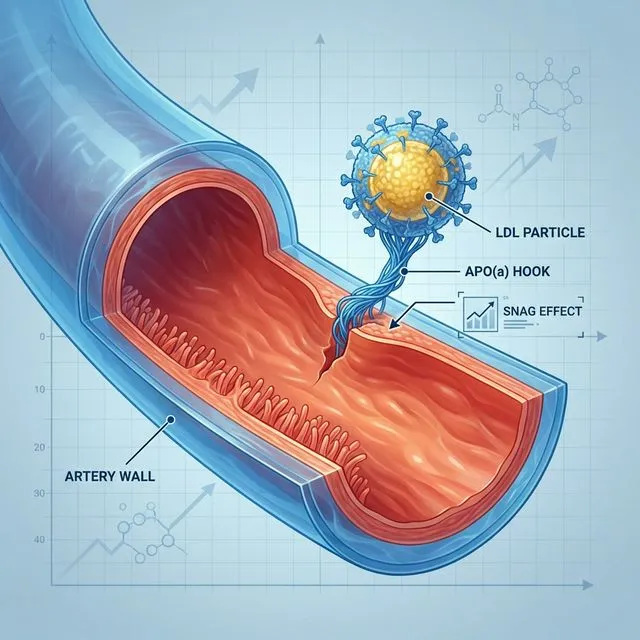
Lp(a): The Genetic Heart Risk
You can have perfect cholesterol and still be at risk. Learn the science of Lipoprotein(a), the genetic particle that standard blood tests miss.