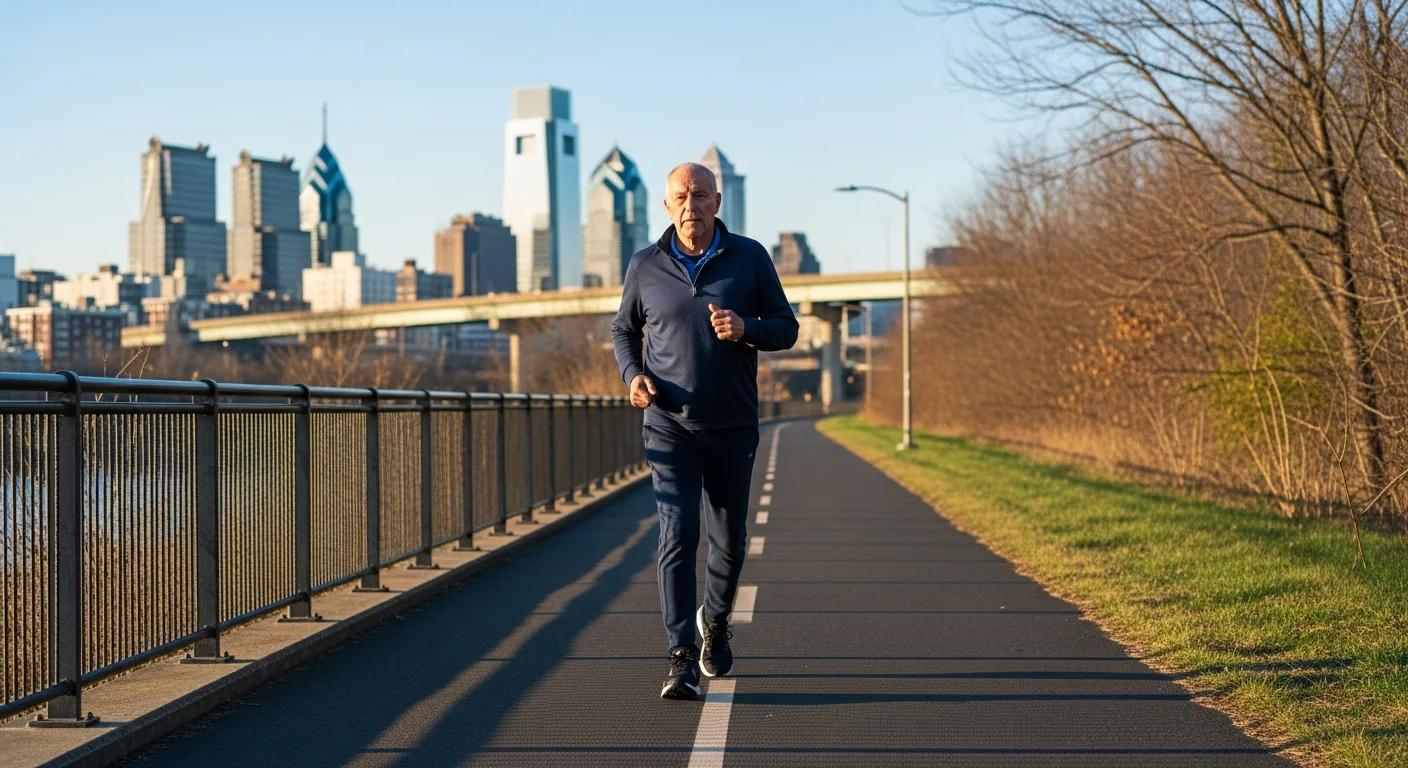

POTS (postural orthostatic tachycardia syndrome) is diagnosed when your heart rate rises 30+ beats per minute (40+ in teens aged 12 to 19) within 10 minutes of standing without a blood pressure drop (< 20/10 mmHg), alongside 3+ months of upright dizziness, palpitations, fatigue, or brain fog. At Fishtown Medicine in Philadelphia, a 90-minute first visit covers an in-office 10-minute active stand test, lab checks for mimics (ferritin >= 50 ng/mL, thyroid, cortisol, autoimmune drivers), and a 4-part foundation (500 mL morning water bolus + 3 L daily fluid, 8 to 12 g salt, 30 to 40 mmHg waist-high compression, and recumbent exercise), layered with low-dose propranolol, ivabradine, midodrine, fludrocortisone, or pyridostigmine when needed.
POTS (postural orthostatic tachycardia syndrome) has become far more common in Philadelphia since COVID-19. Named at Mayo Clinic in 1993 by Dr. Ronald Schondorf and Dr. Philip Low (Schondorf & Low, Neurology 1993), POTS affected 1 to 3 million Americans before 2020 and roughly doubled after the pandemic, with about 80% of cases in women aged 15 to 50 (Chung & Raj, JAMA 2026).
Many patients arrive at our clinic after months of being told their racing heart and dizziness are "just anxiety" or "being out of shape." Yet in a Mayo Clinic study of 94 patients (Benrud-Larson et al., Mayo Clin Proc 2002), untreated POTS limited daily physical life as much as congestive heart failure or COPD, and roughly 25% of patients could not work or attend school full-time during flares. Lab testing also proves POTS is not an anxiety disorder: POTS patients have the same heart-rate response to mental stress as healthy peers (Masuki et al. 2007) and have equal or lower lifetime rates of panic disorder than the general public (Raj et al. 2009).
What is POTS, and what triggers it?
POTS is an autonomic nervous system condition where standing causes a sustained pulse rise of 30+ bpm (40+ bpm in ages 12 to 19) within 10 minutes without a blood pressure drop, often triggered by a virus, surgery, pregnancy, or an underlying connective-tissue or autoimmune condition.
Under consensus criteria (HRS 2015, NIH/Vernino 2021), a diagnosis requires:
- Sustained heart-rate rise >= 30 bpm (>= 40 bpm in ages 12 to 19) within 10 minutes of standing or tilt.
- No orthostatic hypotension (blood pressure does not drop by 20+ mmHg systolic or 10+ mmHg diastolic).
- Upright symptoms for 3+ months that worsen when standing and ease when lying flat: lightheadedness and a racing heart, chest pounding, shakiness, brain fog, fatigue, nausea, heat intolerance. A reddish-purple color in the lower legs (acrocyanosis, seen in ~50% of patients on standing, Stewart 2002).
Roughly half of patients have neuropathic POTS, where small nerve fibers in the lower legs do not squeeze blood vessels tightly enough against gravity (Gibbons 2013). Others have hypovolemic POTS (low blood volume) or hyperadrenergic POTS (an oversized standing adrenaline surge). Most people have a mix of all three. Common triggers and companion conditions include:
- Post-viral onset (30% to 40% of cases): Long COVID (SARS-CoV-2), Epstein-Barr virus (EBV/mono), flu, Mycoplasma pneumoniae, or Lyme disease (Kanjwal 2011).
- Connective tissue and mast cell overlap: Hypermobile Ehlers-Danlos syndrome (hEDS) and mast cell activation syndrome (MCAS).
- Autoimmune causes: Sjögren's syndrome (the most common autoimmune cause of small-fiber nerve damage, Goodman 2017), celiac disease, thyroid disease, antiphospholipid syndrome (Schofield 2014), and gAChR antibodies.
- Life events: Surgery, concussion, or pregnancy and the months after birth.
How do we diagnose POTS in primary care, and when do we use autonomic lab testing?
We diagnose most POTS in the office with a morning 10-minute active stand test (79% specificity) and blood tests for iron, thyroid, and cortisol, saving hospital tilt-table or sweat-nerve (QSART) testing for unclear cases.
In our 90-minute first visit, we run the workup step by step:
- 10-minute active stand test or NASA Lean Test: After 5 to 10 minutes lying flat (
Supine 1 minandSupine 2 min), we check pulse, blood pressure, and symptoms atStanding 0 minand every minute throughStanding 10 min. You stand barefoot with your heels 6 inches from the wall and only your shoulder blades touching the wall (Bryarly & Levine JACC 2019, Iftekhar 2025). - Mimic and root-cause labs: CBC, CMP, ferritin and iron panel (targeting ferritin >= 50 ng/mL, since 50% of young POTS patients have ferritin <= 25 ng/mL, Jarjour 2013), TSH and free T4, morning cortisol, vitamin B12, and vitamin D. When dry eyes or mouth, burning feet, flushing, or loose joints are present, we add SSA/SSB (Sjögren's), tTG-IgA (celiac), or mast cell markers.
- 12-lead ECG (and Zio patch monitor or echo when needed): Rules out rhythm problems.
- When we order hospital autonomic testing: A stand test can miss POTS on a mild symptom day. It cannot test small sweat nerves directly. When the office test is borderline or nerve loss is suspected, we refer to Penn or Jefferson autonomic labs for a tilt-table study, a Quantitative Sudomotor Axon Reflex Test (QSART), or an ankle skin biopsy for small-fiber nerve density (Gibbons 2013).
 Positioning photographs and 10-minute lean test instructions courtesy of the Bateman Horne Center (NASA 10-Minute Lean Test PDF).
What is the non-drug foundation for POTS?
Four non-drug habits expand blood volume and cut standing pulse jumps in clinical trials: a 500 mL morning water bolus (-15 bpm) plus 3 liters of fluid daily, 8 to 12 g of salt (-10 bpm), 30 to 40 mmHg waist-high or belly compression (-17 bpm), and recumbent exercise (53% to 71% remission).
Medications work far better when the tank is full first:
Fishtown Medicine
A 90-minute conversation with Dr. Ash. A written plan you can follow.
- Morning water bolus + daily fluid (2.5 to 3+ L/day): Drinking 500 mL (16 oz) of water before getting out of bed triggers a vessel squeeze that lowers standing heart rate by 15 bpm (Shannon 2002).
- High dietary salt (8 to 12 g NaCl/day, or 4 to 6 g sodium, when resting BP is normal): In a JACC trial (Garland 2021), high salt fixed the plasma volume deficit, lowered standing stress hormones, and dropped standing pulse by 10 bpm.
- WHO Oral Rehydration Salts (TriOral) and a crash-day bite-valve bottle: When table salt upsets your stomach or chugging plain water on a crash day causes nausea, 1 packet of unflavored TriOral mixed into 1 liter of water delivers 1,695 mg (about 1,700 mg) sodium, 780 mg potassium, 13.5 g glucose, and 2.9 g trisodium citrate (zero citric acid, stevia, or dyes for comorbid MCAS) at roughly $0.42 per liter. The 1:1 sodium-to-glucose ratio turns on the gut's SGLT1 pump and expanded blood volume as effectively as 1 liter of IV saline in POTS crossover testing (Medow J Pediatr 2019). Chill it or add a splash of lemonade flavoring, and keep a spill-resistant bite-valve bottle on the mattress so you can sip while lying flat before sitting up (see our hydration and electrolytes guide).
- Waist-high or belly compression (30 to 40 mmHg): Because 2 to 3 times more blood pools in the belly and pelvis (splanchnic veins) than in the calves, waist-high tights or a belly binder cut the standing pulse jump by 17 bpm and cut symptoms in half (Bourne JACC 2021).
- Graded recumbent exercise (Levine/Dallas protocol, HRS Class IIa): Starting flat on a rower, recumbent bike, or in a pool 3 to 4 times a week grows heart muscle mass (+12%) and blood volume (+7%), putting 53% to 71% of patients into remission at 3 months (Fu JACC 2010, George 2016). If you have Long COVID or ME/CFS with post-exertional crashes (PEM), we start at 5 to 10 minutes of easy horizontal movement.
- Daily habits: Raising the head of the bed 4 to 6 inches (which helps the kidneys hold fluid overnight), eating smaller low-sugar meals so blood does not rush to the gut after lunch, and using a shower chair on hot days.
Which medications help POTS when salt, water, and compression are not enough?
When lifestyle steps are not enough, we add off-label medications (HRS Class IIb) matched to your body: low-dose propranolol or ivabradine to calm a fast pulse, midodrine to tighten pooling veins, fludrocortisone to hold salt and water, or pyridostigmine when slow digestion rides along.
- Low-dose propranolol (10 to 20 mg up to 3-4x daily): Lowers standing heart rate and eases shaky adrenaline surges. In Raj Circulation 2009, 20 mg improved symptoms and exercise capacity. In contrast, high doses (80 mg) caused fatigue.
- Ivabradine (2.5 to 7.5 mg twice daily): Slows the heart's pacemaker by 18.5 bpm without dropping blood pressure or causing beta-blocker fatigue (Taub JACC 2021, Uppal 2026).
- Midodrine (2.5 to 10 mg 3x daily during upright hours): Tightens veins (alpha-1 agonist) for patients with low blood pressure and purple blood pooling in the legs.
- Fludrocortisone (0.1 to 0.2 mg daily): Helps the kidneys hold sodium and water in low-volume POTS (we recheck potassium after starting).
- Pyridostigmine (30 to 60 mg 2-3x daily): Boosts vagal nerve signaling, drops standing pulse by 15 bpm, and helps when constipation or slow digestion rides along (Raj 2005).
How does POTS care work at Fishtown Medicine, and what does it cost?
Your first visit is 90 minutes so we can run a full 10-minute stand test, draw root-cause labs, and start a written volume and compression plan on day one, with all visits and direct messaging included in your practice membership.
We follow up at 4 to 6 weeks to review your ferritin, thyroid, and autoimmune labs, check your home stand-test log, and add or adjust medications if needed. When formal tilt-table or QSART nerve testing is needed at Penn or Jefferson, we send a full chart packet so you do not start from scratch after a long waitlist. Labs, imaging, and prescriptions are billed separately through your insurance or cash-pay lab rates. See membership pricing for current practice details.
Key Takeaways
- POTS is a measurable autonomic condition, not anxiety: A sustained 30+ bpm standing pulse rise (40+ bpm in teens) within 10 minutes without a blood pressure drop, backed by studies showing normal mental-stress responses (Masuki 2007) and heart-failure-level functional impact when untreated (Benrud-Larson 2002).
- Look for root causes and mimics: Check ferritin (goal >= 50 ng/mL), thyroid, morning cortisol, ECG. When indicated screen for small-fiber nerve loss (~50% of POTS), Sjögren's, celiac, MCAS, and hEDS.
- Start with the 4-part non-drug foundation: A 500 mL morning water bolus (-15 bpm) + 3 L fluid, 8 to 12 g NaCl/day (-10 bpm), 30 to 40 mmHg waist-high or belly compression (-17 bpm), and graded recumbent exercise (53% to 71% remission).
- Match medications to the phenotype: Low-dose propranolol (10-20 mg) or ivabradine (2.5-7.5 mg BID) for fast pulse, midodrine for venous pooling, fludrocortisone for low volume, or pyridostigmine for gut slowness.
Scientific References
- Chung TH, Raj SR. Postural Orthostatic Tachycardia Syndrome (POTS): A Review. JAMA. 2026. JAMA
- Sheldon RS, Grubb BP, Olshansky B, et al. 2015 Heart Rhythm Society Expert Consensus Statement on the Diagnosis and Treatment of Postural Tachycardia Syndrome, Inappropriate Sinus Tachycardia, and Vasovagal Syncope. Heart Rhythm. 2015;12(6):e41-e63. PMC
- Schondorf R, Low PA. Idiopathic postural orthostatic tachycardia syndrome: an attenuated form of acute pandysautonomia? Neurology. 1993;43(1):132-137. PubMed
- Benrud-Larson LM, Dewar MS, Sandroni P, et al. Quality of life in patients with postural tachycardia syndrome. Mayo Clin Proc. 2002;77(6):531-537. PubMed
- Masuki S, Eisenach JH, Johnson CP, et al. Excessive heart rate response to orthostatic stress in postural tachycardia syndrome is not caused by anxiety. J Appl Physiol. 2007;102(3):896-903. PubMed
- Garland EM, Gamboa A, Nwazue VC, et al. Effect of High Dietary Sodium Intake in Patients With Postural Tachycardia Syndrome. J Am Coll Cardiol. 2021;77(17):2174-2184. PubMed
- Bourne KM, Sheldon RS, Hall J, et al. Compression Garment Reduces Orthostatic Tachycardia and Symptoms in Patients With Postural Orthostatic Tachycardia Syndrome. J Am Coll Cardiol. 2021;77(3):285-296. PubMed
- Fu Q, VanGundy TB, Galbreath MM, et al. Cardiac Origins of the Postural Orthostatic Tachycardia Syndrome. J Am Coll Cardiol. 2010;55(25):2858-2868. PubMed
- Taub PR, Zadourian A, Lo HC, et al. Randomized Trial of Ivabradine in Patients With Hyperadrenergic Postural Orthostatic Tachycardia Syndrome. J Am Coll Cardiol. 2021;77(7):861-871. PubMed
- Gibbons CH, Bonyhay I, Benson A, et al. Structural and functional small fiber abnormalities in the neuropathic postural tachycardia syndrome. PLoS One. 2013;8(12):e84716. PubMed
Related Services and Reading
- Dizziness and a Racing Heart When You Stand - a patient case on catching POTS with a 10-minute stand test
- Long COVID Care in Philadelphia
- MCAS Treatment in Philadelphia
- Hypermobile EDS Care in Philadelphia
- Chronic Fatigue Treatment in Philadelphia
- Brain Fog Treatment in Philadelphia
- Direct Primary Care in Philadelphia
- Lyme Disease Care - acute and chronic Lyme management
- Sleep Disorders - from insomnia to OSA, the systematic sleep workup

Frequently Asked Questions
Common Questions
Deep-Dive Questions
Ready when you are
The chat is our AI assistant, answering from our published guides. To talk it through with Dr. Ash himself, start with the intake.