
A thyroid nodule found by chance on a scan is almost always benign. High-resolution ultrasound finds nodules in 19% to 68% of adults (pooled 24.8%, Grani 2024; 68% on 13-MHz probes, Guth 2009), and while 7% to 15% of referred nodules are cancer, only 1.1% of unselected nodules >1 cm proved malignant over 23 years (Boucai JAMA 2024). Across 12 to 63 countries, 70% to 90% of thyroid cancer diagnoses represent overdiagnosis of indolent papillary tumors from a silent autopsy reservoir present in 11.2% to 35.6% of people (Ahn NEJM 2014; Vaccarella NEJM 2016; Furuya-Kanamori JCO 2016), which is why the USPSTF gives asymptomatic screening a Grade D. When a nodule turns up, we follow 4 evidence-based steps: (1) check TSH first (if low, order a 123I scan so "hot" nodules with <2% cancer risk aren't biopsied, ATA 2015), (2) score ultrasound features and size with ACR TI-RADS (TR3 FNA >=2.5 cm, TR4 >=1.5 cm, TR5 >=1.0 cm, cutting unnecessary biopsies from 51% to 25%, Kim 2021), (3) use Afirma GSC or ThyroSeq v3 on indeterminate Bethesda III/IV biopsies to avoid surgery in ~50% (Livhits JAMA Oncol 2021 RCT), and (4) offer active surveillance for low-risk <=1 cm papillary microcarcinomas (0% thyroid cancer deaths over 30 years at Kuma Hospital, Miyauchi 2023; Tuttle JAMA Otolaryngol 2017; ATA 2025 Rec 11A).
TL;DR: A thyroid nodule spotted by chance on a scan is benign 90% to 99% of the time. You rarely need a rush biopsy or surgery.
- Check your personal risk first: Mass screening of healthy people caused a 15-fold jump in thyroid surgeries in South Korea without lowering deaths. We check your family history, past neck radiation, thyroid antibodies, and neck exam first, and keep any ultrasound off the surgical conveyor belt.
- Follow the 4-step workup: Start with a TSH blood test (so overactive "hot" nodules are not biopsied). Next, score the nodule on ultrasound using ACR TI-RADS points and size cutoffs, which cuts unnecessary benign biopsies in half. If a biopsy comes back unclear (Bethesda III or IV), gene testing (Afirma GSC or ThyroSeq v3) spares half of patients from diagnostic surgery.
- Know when watching beats operating: For small, low-risk papillary cancers 1 cm or under, 30-year Kuma Hospital and MSKCC cohorts show 0% thyroid cancer deaths with active ultrasound watching, while avoiding lifelong thyroid pills and nerve or calcium injury.
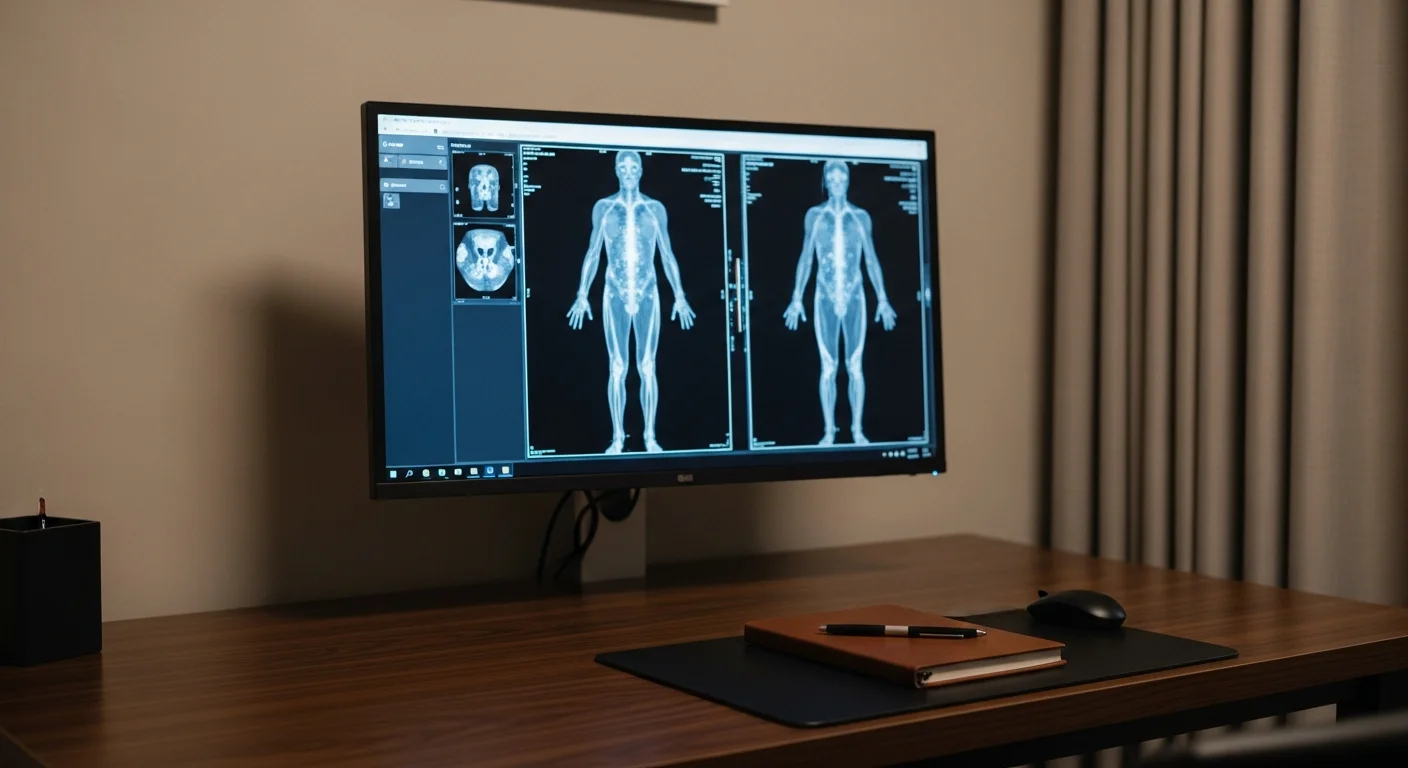
A 44-year-old software engineer in Society Hill walked into my office holding a $2,500 boutique full-body MRI report that flagged a 1.1 cm right thyroid nodule and told her to book an urgent surgical biopsy. When we checked her TSH (1.6 mIU/L) and ordered a dedicated thyroid ultrasound scored with ACR TI-RADS, the nodule was spongy and wider-than-tall (0 points, TR1 benign, under 2% cancer risk). That meant it needed zero needle biopsy and zero follow-up ultrasounds. Walking through the South Korean overdiagnosis curve and the ACR TI-RADS point chart together turned a week of surgical panic into an immediate all-clear.
How common are thyroid nodules, and why do autopsies find so many silent tumors?
High-resolution ultrasound finds thyroid nodules in 19% to 68% of adults (24.8% pooled in Grani 2024; 68% on high-frequency probes in Guth 2009), whereas a doctor's hands feel them in only about 5% of women and 1% of men (Boucai JAMA 2024).
While specialty clinics cite a 7% to 15% cancer rate among nodules sent for biopsy (Haugen 2016), that number reflects referral bias. In a study of 17,592 patients with nodules over 1 cm followed for up to 23 years, thyroid cancer was found in only 1.1% (Boucai JAMA 2024).
Why does looking harder with ultrasound create so many cancer diagnoses? Healthy adults carry a large microscopic supply of slow-growing papillary thyroid cancer that never spreads or causes harm:
- Whole-gland autopsy rates: Across 12,834 autopsies of people who died of other causes, whole-gland checks found silent thyroid cancer in 11.2% (Furuya-Kanamori JCO 2016). When Finnish pathologists sliced glands every 2.5 mm, they found tiny papillary tumors in 35.6%, and two-thirds were smaller than 1 mm (Harach Cancer 1985).
- Age and sex parity at autopsy versus clinic: At autopsy, silent papillary cancer rates do not rise with age (11.5% at age 40 and under vs. 13.4% past age 80, Arroyo JCEM 2022) and are nearly equal in men and women. Yet in clinics, small papillary cancer is diagnosed 3 times more often in women (LeClair JAMA Intern Med 2021) because women get more routine neck checks and scans.
What did South Korea's 15-fold thyroid cancer surge prove about overdiagnosis?
When $30 to $50 ultrasound add-ons spread across South Korea after 1999, thyroid cancer diagnoses jumped 15-fold by 2011 (over 40,000 cases a year) while annual deaths stayed flat at 300 to 400 (Ahn, Kim & Welch NEJM 2014; Choi Cancer 2017). Worldwide, 70% to 90% of thyroid cancer diagnoses in high-income nations reflect overdiagnosis (Vaccarella NEJM 2016; Li 2024).
| Country / Cohort & Landmark Study | Screening & Incidence Trajectory | Mortality Trajectory | Documented Surgical Harms & Reversal After Scaling Back Screening |
|---|---|---|---|
| South Korea (Ahn, Kim & Welch, NEJM 2014; Choi Cancer 2017; Kang 2020) | Incidence rose 15-fold from 1993 to 2011 (115.0 per 100,000 in 2012; > 40,000 cases/yr), nearly all papillary tumors (tumors < 1 cm rose from 14% to 56% of surgeries). | Held at ~300-400 deaths/year (> 100:1 diagnosis-to-death ratio; age-adjusted rate 0.17/100k in 1985, 0.85 in 2004, 0.42 in 2015, Choi 2017). | Two-thirds had total thyroid removal, causing 11% low-calcium parathyroid injury and 2% vocal-cord palsy. After doctors urged stopping screening in 2014, cases fell ~30% (to 63.5/100k) and surgeries fell ~35% (Chen & Haymart 2026). |
| 12 to 63 Countries Worldwide (Vaccarella et al., NEJM 2016; Li et al., Lancet Diabetes Endocrinol 2024) | Overdiagnosis accounted for ~90% of female cases in South Korea, 70%-80% in the US, Italy, France, and Australia, and ~50% in Japan, the UK, and Nordic countries. | Flat death rate (0.4-0.5 per 100,000) despite > 560,000 overdiagnosed patients (2016) and 75.6% of 2.3 million cases (2013-2017, Li 2024). | Led the US Preventive Services Task Force (USPSTF 2017) to issue a Grade D rating against screening adults without symptoms. |
| United States (Lim JAMA 2017; Megwalu Thyroid 2022; Hegedüs NEJM 2026) | US cases more than doubled from 6.0 (1992) to > 14 per 100,000 (2015), then began falling ~1%/year after 2015 ATA rules, 2016 NIFTP renaming, and 2017 ACR TI-RADS. | Overall death rate stayed 0.4-0.5 per 100,000, though deaths from advanced-stage disease rose +1.1%/year (Lim 2017; Megwalu 2022). | Shows that while most of the surge was overdiagnosis, a small share of advanced thyroid cancers is aggressive and requires careful risk scoring. |
Where Population Guidelines End and Proactive Personal Care Begins
Why does the USPSTF give asymptomatic thyroid screening a Grade D? A population guideline has to answer one question for 300 million unselected people in a rushed 12-minute health system: "What happens if everyone gets scanned blindly?" Without strict follow-up rules, a scan turns a harmless 8 mm nodule into an immediate needle biopsy and thyroid surgery. We agree with the USPSTF that uncalibrated mass screening fails.
Where we take your care forward is treating you as an individual instead of a population average:
- Nuanced personal risk: We never stop where the population guideline ends. We look at your personal risk: a first-degree relative with thyroid cancer or a gene syndrome (MEN2, RET, PTEN/Cowden, FAP), childhood neck radiation, Hashimoto's thyroiditis (TPO and TgAb antibodies), insulin resistance (which drives thyroid growth via IGF-1), subtle neck fullness, or an unscored nodule on an old scan.
- Separating the scan from the surgical conveyor belt: Looking closely with an ultrasound does not cause harm by itself. Harm happens when a doctor lacks the discipline to read the result calmly. We pair every thyroid ultrasound with our four-step guardrails (TSH first, ACR TI-RADS cutoffs, Afirma GSC / ThyroSeq v3 gene testing, and 30-year active surveillance). That lets us check your thyroid proactively without ever letting a benign or slow-growing nodule push you into surgery.
Step 1 & Step 2: How do ACR 2015 CT/MRI cutoffs, TSH, 123I scans, and ACR TI-RADS decide which nodules need a biopsy?
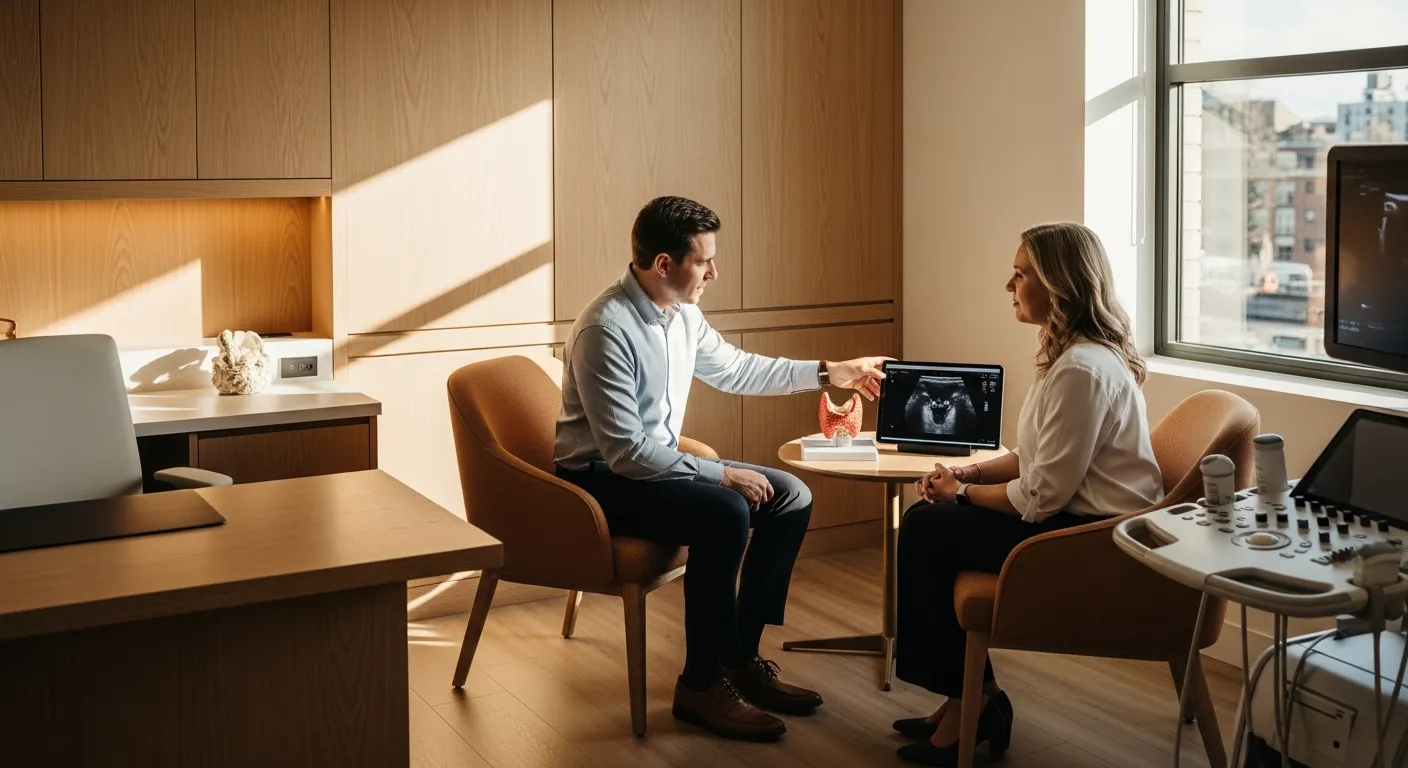
When a nodule turns up on a scan, we never jump straight to a needle. First, if the spot was found by chance on a chest CT, carotid ultrasound, or neck MRI (ACR 2015 Hoang), it needs zero ultrasound if it is under 1.0 cm (under age 35) or under 1.5 cm (age 35 and up) without suspicious lymph nodes or PET uptake (Song Thyroid 2024; Willems Thyroid 2026). When an ultrasound is warranted, we check serum TSH (if low, a 123I scan rules out an overactive "hot" nodule with under 2% cancer risk) and score the nodule with ACR TI-RADS, which cuts unnecessary benign biopsies in half (25% vs. 51%, Kim 2021).
Gate 0: When a CT, MRI, or Carotid Scan Mentions a Thyroid Nodule
Many thyroid nodules are first spotted by accident on a chest CT, neck spine MRI, or carotid ultrasound. Under the ACR Incidental Thyroid Nodule White Paper (Hoang JACR 2015):
- Under age 35 (under 1.0 cm) and age 35 and up (under 1.5 cm): If the nodule is below these size cutoffs and there are no suspicious neck lymph nodes or local invasion, no dedicated thyroid ultrasound is needed. Across 6,272 CT thyroid spots (Song Thyroid 2024), cancer was 3.9% overall, with 0.1% cancer in nodules under 1.0 cm and 0% in nodules under 1.5 cm. In a 2026 study across CT, ultrasound, and MRI incidentalomas (Willems Thyroid 2026), confirmed cancer was 1.8%.
- The PET scan exception: A thyroid nodule that lights up focally on an FDG-PET scan carries a 19.3% to 30.9% cancer rate (Scappaticcio 2021; Coerts 2026), while whole-gland uptake is usually benign Hashimoto's thyroiditis. Any focal PET-avid thyroid nodule with normal or high TSH gets a dedicated ultrasound and fine-needle biopsy if 1.0 cm or larger.
Why TSH Comes First
A higher TSH (even in the upper half of the normal range) goes with a higher chance of cancer (Haugen 2016). On the other hand, if your TSH is below normal, we order a radionuclide thyroid scan (123I preferred):
- Overactive ("hot") nodules soak up iodine and are almost never cancer (under 2% overall cancer risk; 96% to 99% negative predictive value; in surgical series, 3.4% overall and 7.3% in single toxic nodules vs. 1.0% in multinodular goiter, Koelliker Surgery 2025).
- More than 80% of benign hot nodules look suspicious on ultrasound (TI-RADS 4 or 5) (Noto 2020). Checking TSH first avoids a needless biopsy.
How ACR TI-RADS Scores Points and Size
Radiologists assign points across five ultrasound features (picking the highest score in the first four categories, and adding all present features for bright spots):
- Composition: Cystic or spongy (0 pts); mixed fluid and tissue (1 pt); dense tissue throughout (2 pts; if heavy calcium shadowing hides the inside, score 2 pts).
- Brightness (echogenicity): Fluid-black (0 pts); brighter or equal to thyroid tissue (1 pt; or 1 pt if unscorable); dark (2 pts); very dark (3 pts).
- Shape: Wider-than-tall (0 pts); taller-than-wide (3 pts).
- Margin: Smooth or ill-defined (0 pts); lobulated or irregular (2 pts); growing outside the thyroid (3 pts).
- Bright spots (add all present): None or comet-tail artifacts (0 pts); coarse calcium (1 pt); rim calcium (2 pts); tiny pinpoint bright spots (3 pts).
Fishtown Medicine
A 90-minute conversation with Dr. Ash. A written plan you can follow.
| ACR TI-RADS Level & Total Points | Estimated Cancer Risk | Fine-Needle Biopsy (FNA) Size Cutoff | Follow-Up Ultrasound Size Cutoff & Schedule (ACR 2017 / 2025) |
|---|---|---|---|
| TR1 (Benign, 0 points) | <= 2% | No biopsy | No follow-up ultrasound needed. |
| TR2 (Not Suspicious, 2 points) | <= 2% | No biopsy | No follow-up ultrasound needed. |
| TR3 (Mildly Suspicious, 3 points) | ~5% | Biopsy if >= 2.5 cm | Follow-up US if >= 1.5 cm at 1, 3, and 5 years (stop at 5 years if stable). |
| TR4 (Moderately Suspicious, 4 to 6 points) | 5% to 20% | Biopsy if >= 1.5 cm | Follow-up US if >= 1.0 cm at 1, 2, 3, and 5 years (stop at 5 years if stable). |
| TR5 (Highly Suspicious, >= 7 points) | > 20% | Biopsy if >= 1.0 cm | Follow-up US if >= 0.5 cm every year for up to 5 years (stop at 5 years if stable). |
Three ACR TI-RADS rules protect you from overtreatment:
- Cuts unnecessary biopsies in half: Across 27,933 nodules (Hoang JACR 2021) and a meta-analysis (Kim Eur Radiol 2021), ACR TI-RADS recommended biopsy for 25% to 29.1% of nodules compared with 51% to 58.7% under 2015 ATA rules, avoiding 53.4% of biopsies with a 97.8% negative predictive value (Grani JCEM 2019). Raising the TR4 biopsy threshold to 2.5 cm (Li Thyroid 2024) also halved unnecessary biopsies (25% vs. 48%).
- Multiple nodules rule: If you have several nodules, radiologists biopsy no more than the two nodules with the highest TI-RADS point scores (instead of the two largest nodules).
- What counts as true growth (and stopping at 5 years): A nodule has grown only if it increases by 20% or more (and at least 2 mm) in two dimensions, or 50% or more in volume. If a nodule has not grown at 5 years, imaging follow-up is complete and stops.
Step 3: What if my biopsy is indeterminate (Bethesda III or IV), and how do Afirma GSC and ThyroSeq v3 work?
About 15% to 25% of thyroid needle biopsies return "indeterminate" (Bethesda III with ~22% cancer risk or Bethesda IV with ~30% risk). Gene testing on the biopsy sample (Afirma GSC or ThyroSeq v3) rules out cancer with 96% to 100% accuracy and lets about half of patients skip diagnostic surgery (Livhits JAMA Oncol 2021).
| Molecular Classifier & Landmark Trial | Sensitivity & Specificity | Negative Predictive Value (NPV - Rules Out Cancer) | Positive Predictive Value (PPV - Confirms Cancer) | Benign Call Rate (Spares Surgery) |
|---|---|---|---|---|
| Afirma GSC Validation (Patel et al., JAMA Surg 2018) | Sens 91% / Spec 68% | 96% (at 24% cancer prevalence) | 47% | 54% (67% in practice meta-analysis, Nasr JCEM 2023) |
| ThyroSeq v3 Validation (Steward et al., JAMA Oncol 2019) | Sens 94% / Spec 82% | 97% (at 28% cancer prevalence; stays >= 95% up to 40%-60% prevalence) | 66% | 61% |
| Head-to-Head RCT: Afirma GSC vs. ThyroSeq v3 (Livhits et al., JAMA Oncol 2021, n = 346; Kim JCEM 2023) | - GSC: Sens 100% / Spec 80% - ThyroSeq v3: Sens 97% / Spec 85% | - GSC: ~100% - ThyroSeq v3: ~99% (0.6% false-negative rate over 34 months, Kim 2023) | - GSC: 53% - ThyroSeq v3: 63% | 51% (GSC) and 49% (ThyroSeq v3) avoided diagnostic surgery (92% of benign calls stayed safely on ultrasound checks). |
Per NCCN Thyroid Carcinoma Guidelines (v2.2026):
- When gene testing is negative / benign (4% or lower combined risk): Follow with ultrasound checks just like a benign biopsy.
- When gene testing is positive (PPV 47% to 66%): A positive result does not automatically mean removing the whole thyroid. Isolated RAS-like changes are benign or noninvasive (NIFTP) about half the time, and Hashimoto's thyroiditis can lower specificity (Ahmadi JCEM 2026).
Step 4: How safe is active surveillance for low-risk papillary microcarcinoma (1 cm or under)?
For low-risk papillary thyroid microcarcinomas (1 cm or under, cT1aN0M0) away from the windpipe and voice nerve, 2025 ATA Guidelines (Rec 11A) and NCCN (v2.2026) support active surveillance with ultrasound every 6 months for 1 to 2 years, then yearly (Miyauchi 2023; Tuttle JAMA Otolaryngol 2017).
| Active Surveillance Cohort | Patients & Follow-Up | Tumor Growth (>= 3 mm) & Nodal Spread Rates | Thyroid Cancer Mortality & Surgical Conversion Outcomes |
|---|---|---|---|
| Kuma Hospital, Japan (Ito Thyroid 2014, n = 1,235; Miyauchi Thyroid 2023, 30-Year Update, n = 5,646 / 3,222 watched) | 3,222 patients watched up to 30 years. | - 10-yr growth >= 3 mm: 4.7% (8.0% in 2014 report) - 10-yr new nodal spread: 1.0% (3.8% in 2014) - By age (Ito 2014): 10-yr progression 22.5% at < 40 yrs vs. 2.5% at >= 60 yrs. | 0% thyroid cancer deaths in both watched and immediate-surgery groups over 30 years. Only 12.2% converted to surgery (zero extra complications, Sasaki 2023), and watching cut temporary parathyroid injury (2.8% vs. 16.7%) and vocal-cord palsy (0.6% vs. 4.1%). |
| Memorial Sloan Kettering (MSKCC) (Tuttle et al., JAMA Otolaryngol Head Neck Surg 2017, n = 291 up to 1.5 cm; 2022, n = 483; Levyn 2024) | 291 to 483 US patients (tumors <= 1.5 cm). | - Growth >= 3 mm: 3.8% (12.1% at 5 years) - 10-yr nodal spread: 3.3% (0% distant spread) - > 50% 3D volume rise caught growth 8.2 months earlier than diameter (median doubling time 2.2 yrs). | 0% thyroid cancer deaths; delayed conversion surgery (Levyn 2024) had the same surgical extent, complication rates, and cure rates as upfront surgery. |
| Tokyo Cancer Institute (Sugitani 2025) & Korean MAeSTro (Lee 2022; Hwang Ann Surg 2023, n = 706) | Japanese & Korean multicenter cohorts. | Progression in 6.8% (MAeSTro); growth became rare after 15 years of stability or after age 80 (Sugitani 2025). | Delayed surgery after growth achieved the same outcomes as immediate surgery (Hwang 2023). |
When Immediate Evaluation or Surgery IS Required (Red Flags)
Active surveillance applies only to quiet, confined low-risk nodules. We move fast to ultrasound, biopsy, and specialist care for any red flag:
- A fast-growing or hard, fixed neck mass, new hoarseness, trouble swallowing or breathing, or firm enlarged neck lymph nodes.
- Tumors touching the windpipe, esophagus, back capsule, or voice-box nerve, or aggressive cell types (medullary, anaplastic, or high-grade follicular cancer).
- Focal uptake on a PET scan (19% to 31% cancer risk), childhood neck radiation, or family history of medullary thyroid cancer or MEN2.
Key Takeaways
- Take It Forward From Where Guidelines End (USPSTF Grade D vs. Personal Care): We agree with population guidelines that blind mass screening (which drove a 70% to 90% overdiagnosis surge in South Korea and high-income nations) fails when every tiny nodule goes to surgery. Instead of stopping where the guideline ends, we measure your personal risk (family history, radiation, Hashimoto's TPO/TgAb, metabolic health, or neck exam) and pair any scan with strict guardrails so proactive answers never lead to overtreatment.
- Use the 4-Step Workup: (1) Check TSH first (if low, run a 123I scan to rule out hot nodules), (2) apply ACR TI-RADS points and size cutoffs (TR3 >= 2.5 cm, TR4 >= 1.5 cm, TR5 >= 1.0 cm, cutting benign biopsies in half), (3) run Afirma GSC or ThyroSeq v3 on Bethesda III/IV samples (sparing ~50% from diagnostic surgery), and (4) offer active surveillance for low-risk <= 1 cm papillary microcarcinomas (0% 30-year mortality).
- Act fast on red flags: A fast-growing or fixed hard mass, hoarseness, trouble swallowing, firm neck lymph nodes, focal PET uptake, or childhood radiation / MEN2 family history warrants immediate ultrasound and specialist care.
Related at Fishtown Medicine
- When You Need an Ultrasound, Body Part by Body Part
- The Neck Lump That Comes and Goes
- High Thyroid Antibodies (TPO & TgAb) With Normal TSH
- Boutique Scans and Whole-Body MRI: A Clinical Review
- Full-Body MRI Screening
- Thyroid Treatment in Philadelphia
Scientific References
- Overdiagnosis Epidemiology & Autopsy Reservoir: Ahn HS, Kim HJ, Welch HG. N Engl J Med. 2014;371(19):1765-1767; Choi YM, et al. Cancer. 2017;123(20):4026-4032; Vaccarella S, Franceschi S, Bray F, et al. N Engl J Med. 2016;375(7):614-617; Li M, Dal Maso L, Pizzato M, Vaccarella S. Lancet Diabetes Endocrinol. 2024;12(11):804-815; Harach HR, Franssila KO, Wasenius VM. Cancer. 1985;56(3):531-538; Furuya-Kanamori L, et al. J Clin Oncol. 2016;34(30):3672-3679; Arroyo N, et al. J Clin Endocrinol Metab. 2022;107(10):2945-2952; LeClair K, et al. JAMA Intern Med. 2021;181(10):1351-1358; Megwalu UC, Moon PK. Thyroid. 2022;32(5):560-570; US Preventive Services Task Force. JAMA. 2017;317(18):1882-1887; Boucai L, Zafereo M, Cabanillas ME. JAMA. 2024;331(5):425-435; Grani G, et al. Nat Rev Endocrinol. 2024;20(11):659-673; and Chen DW, Haymart MR. Nat Rev Endocrinol. 2026.
- ACR TI-RADS, Incidental CT/MRI Triage, TSH & Scintigraphy: Hoang JK, Langer JE, Middleton WD, et al. (ACR Incidental Thyroid Nodules). J Am Coll Radiol. 2015;12(2):143-150; Song Z, Wu C, Fang J, et al. Thyroid. 2024;34(9):1113-1122; Willems J, et al. Thyroid. 2026;36(1):56-65; Scappaticcio L, et al. Clin Endocrinol. 2021;95(2):340-349; Coerts HI, et al. Thyroid. 2026; Tessler FN, Middleton WD, Grant EG, et al. (ACR TI-RADS). J Am Coll Radiol. 2017;14(5):587-595; Middleton WD, et al. AJR Am J Roentgenol. 2018;210(5):1148-1154; Kim PH, et al. Eur Radiol. 2021;31(5):2877-2885; Hoang JK, et al. J Am Coll Radiol. 2021;18(11):1497-1505; Li W, et al. Thyroid. 2024;34(6):743-752; Grani G, et al. J Clin Endocrinol Metab. 2019;104(1):95-102; Haugen BR, et al. (2015 ATA). Thyroid. 2016;26(1):1-133; Ringel MD, Sosa JA, Baloch Z, et al. (2025 ATA). Thyroid. 2025; Noto B, et al. Eur J Nucl Med Mol Imaging. 2020;47(7):1724-1731; and Koelliker EL, et al. Surgery. 2025.
- Bethesda III/IV Molecular Classifiers (Afirma GSC & ThyroSeq v3): NCCN Clinical Practice Guidelines in Oncology: Thyroid Carcinoma (v2.2026); Patel KN, et al. JAMA Surg. 2018;153(9):817-824; Steward DL, et al. JAMA Oncol. 2019;5(2):204-212; Livhits MJ, Zhu CY, Kuo EJ, et al. JAMA Oncol. 2021;7(1):70-77; Kim NE, et al. J Clin Endocrinol Metab. 2023;108(9):e698-e705; and Nasr CE, et al. J Clin Endocrinol Metab. 2023;108(6):1526-1536.
- Active Surveillance Cohorts (Kuma, MSKCC, MAeSTro): Ito Y, Miyauchi A, et al. Thyroid. 2014;24(1):27-34; Miyauchi A, Ito Y, Fujishima M, et al. Thyroid. 2023;33(7):817-825; Sasaki T, Miyauchi A, et al. Thyroid. 2023;33(2):186-192; Tuttle RM, Fagin JA, Minkowitz G, et al. JAMA Otolaryngol Head Neck Surg. 2017;143(10):1015-1020; Tuttle RM, et al. Thyroid. 2022;32(11):1337-1346; Levyn H, et al. JAMA Otolaryngol Head Neck Surg. 2024;150(10):869-877; Sugitani I, et al. World J Surg. 2025; and Hwang H, et al. (MAeSTro). Ann Surg. 2023;278(2):e332-e339.

Frequently Asked Questions
Common Questions
Ready when you are
The chat is our AI assistant, answering from our published guides. To talk it through with Dr. Ash himself, start with the intake.