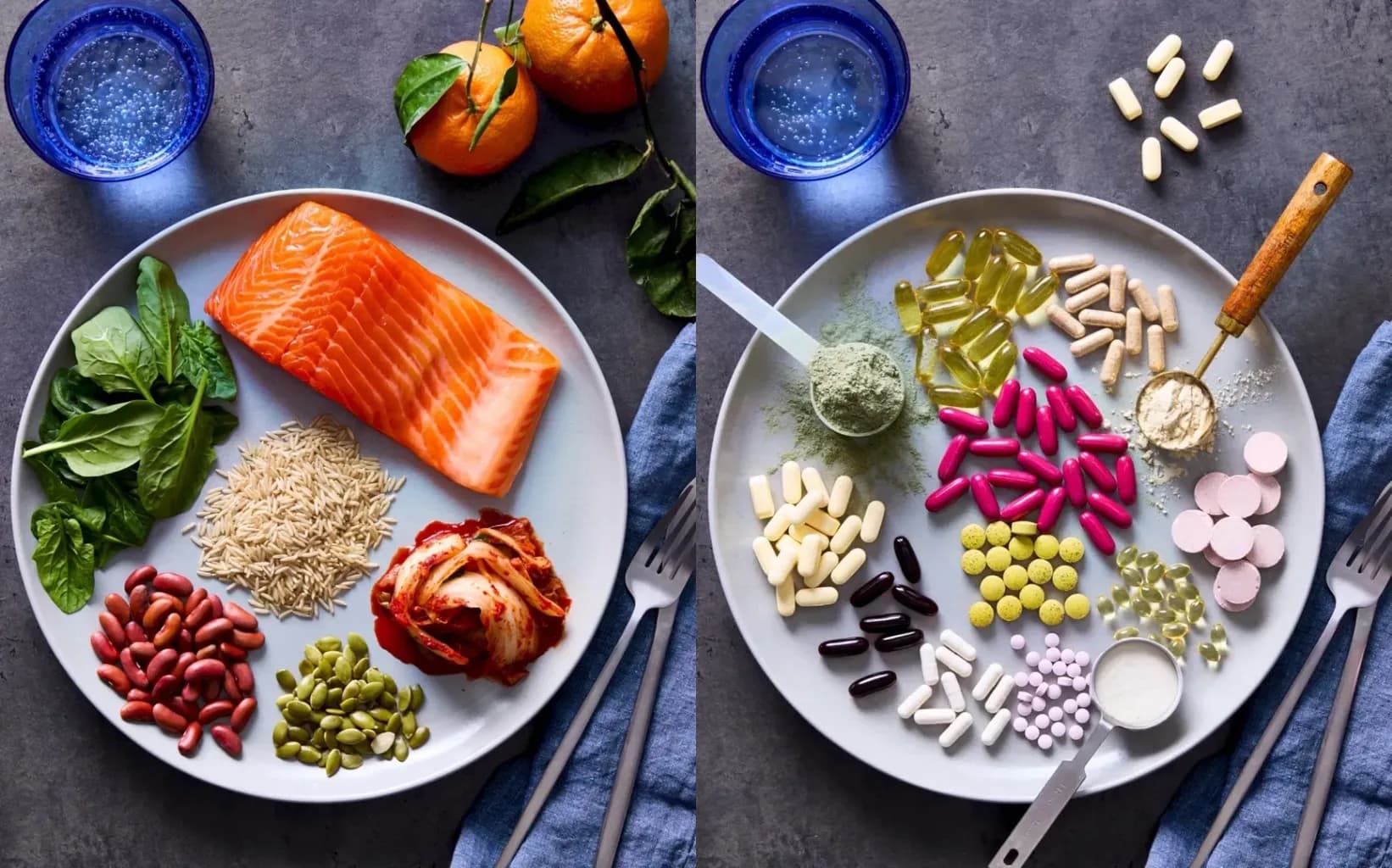

A good supplement strategy starts with 4 questions: Do you need it (based on labs or symptoms), is it safe (third-party tested), is it dosed at a level used in clinical trials, and when do you stop. Skip any of these and you are guessing with your biochemistry.
Biochemistry. Pharmacokinetics. Precision.
(Separating physiology from influencer marketing.)
At Fishtown Medicine, we treat supplements as targeted inputs.
The line between "nutrition," "supplements," and "medications" is much blurrier than the industry wants you to believe. It is all biochemistry.
- Red Yeast Rice contains Monacolin K, which is chemically identical to the prescription statin Lovastatin.
- Willow Bark is the natural source plant that gave us Aspirin.
- Omega-3s at high therapeutic doses act a lot like the prescription medication Vascepa.
Because these compounds act on your body the way drugs do, they need a deliberate clinical strategy. We do not add supplements because they are trending. We add them because we have found a specific lever in your biochemistry we want to pull.
How do you decide if a supplement is worth taking?
We decide if a supplement is worth taking by asking 4 specific questions before anything goes into your routine. We do not browse a catalog or copy what is popular on social media. We test, we target, and we set an exit plan.
1. The "Need": Why this, for what?
"Because its healthy" is not a medical reason. "To lower my ApoB (a blood marker for heart disease risk)" or "To support methylation pathways because of an MTHFR variant (a common gene change that affects how you use B vitamins)" is a medical reason.
We need a specific target:
- A genetic risk: for example, methylated B-Complex to work around an MTHFR variant.
- A metabolic gap: for example, Creatine for cognitive demand during periods of sleep deprivation.
- A symptom: for example, Magnesium Glycinate to calm benign palpitations or help muscle relaxation.
The clinical reality: I have treated patients in the hospital for new onset AFib (an irregular heart rhythm), Vtach (a dangerous fast heart rhythm), cardiomyopathy (a weakened heart muscle), and acute liver shutdown, all caused by supplements they added to their routine to try to be healthier. They were told the compounds were "natural" and therefore safe. In my experience, "natural" does not mean "neutral." If something is strong enough to help you, it is strong enough to hurt you when used the wrong way.
2. The "Safety": Audit the chain
The supplement industry operates in a regulatory gray zone. It is a buyer-beware market.
We demand strict standards for anything we recommend:
- Manufacturing: cGMP (current Good Manufacturing Practice) certification.
- Third-party audits: We look for the NSF Certified for Sport seal or USP Verified seal.
- Brand reputation: No brand is best at everything. We pick the best specific product from reliable manufacturers (Thorne, Pure Encapsulations, Life Extension, and similar).
For a detailed breakdown of how we evaluate manufacturing standards and purity, see how we choose supplements.
3. The "Efficacy": Is the dose therapeutic?
The most common issue I see with off-the-shelf supplements is underdosing.
A label might shout "Turmeric," but if the bottle contains 50mg of raw turmeric powder, you are basically buying expensive food seasoning. To get the anti-inflammatory effect seen in clinical trials, you may need 500 to 1000mg of Meriva, a phytosome form (a delivery format that helps turmeric absorb into your bloodstream).
If the dose is not therapeutic, the supplement will not move the needle on your labs or your symptoms.
4. The "Exit": How long do you take it?
This is the step most people miss. Most supplements are not meant to be taken forever.
- For a deficiency like iron or Vitamin D3, the plan is to retest your levels and taper down.
- For a short-term symptom like Theanine for anxiety, the plan is to use it as needed rather than daily for life.
We set expectations up front: duration, targets, and endpoints.
"Guidance from the Clinic"
"In my practice, I've found that chronic supplement fatigue is common. Patients come in with a shoebox full of bottles, taking 20 pills a day, and they still feel tired. Usually it is because they are taking blends with trace amounts of 50 ingredients, instead of therapeutic doses of the 2 or 3 things their body needs. We strip it back, we test, and we optimize. Less is often more."
Why are "blends" and proprietary mixes a red flag?
Fishtown Medicine
A 90-minute conversation with Dr. Ash. A written plan you can follow.
Blends and proprietary mixes are a red flag because they hide both the dose and the safety risk. You will notice something missing from our clinical guides: "sleep blends," "adrenal support mixes," or generic "greens powders."
We generally avoid these.
When a supplement contains more than 3 active ingredients, it becomes a clinical liability. If you have a reaction, we cannot tell which ingredient caused it. These blends also hide low doses behind "proprietary blend" labeling, which is legal but not transparent.
> Read our Full Guide on Why We Avoid "Proprietary Blends" > Case Study: Why Custom Prenatals Beat "Popular" All-in-Ones
How does Fishtown Medicine work with you on supplements?
We work with you on supplements as a two-way partnership. I bring the biochemistry and pharmacokinetics (how a compound moves through your body). You bring your goals, your lived experience, and your wearable data from devices like Oura or Apple Watch.
Together, we run the same 4 gates, in order, that every supplement here goes through (see how we choose supplements):
- Do you need it? Can we point at the lab value or the symptom this addresses, and does it have an end date?
- Is it safe? Is there an NSF or USP mark by name, rather than a GMP badge or an unattributed "third-party tested" claim?
- Does the dose work? Is the amount one that moved something in human trials, matched to your labs rather than to a retail shelf?
- What does it cost? Among what is left, which is the best value from a source we trust?
There is a fifth thing you should know, and it is about us rather than the product. We take no commission and no referral fee on supplements, and whatever discount our dispensary account earns is passed to you at cost. That is deliberate, because it leaves those 4 gates as the only things deciding what you hear from us.
None of this is magic. It comes down to biology we can measure and adjust.
Actionable Steps in Philly
Build a smarter stack this month.
- Lay out every bottle. Put your full supplement collection on the kitchen counter. Throw out anything expired.
- Write the "why" on each label. If you cannot finish the sentence "I take this because..." with a clear reason tied to a lab value or symptom, that bottle goes in the donate box.
- Get baseline labs. Vitamin D, Ferritin, Magnesium RBC, Vitamin B12, and Homocysteine are common starting points in our Philadelphia panels.
- Cut to 3. Most patients only need 3 to 5 targeted supplements at a time. The rest is noise.
- Set a retest date. Pick a date 90 days from today. Put it in your calendar. We retest, we adjust, we taper what is no longer needed.
"The Supplement Standard" Series
For a deeper look at our clinical logic, read our 4-part series on performance supplementation:
- Stop Guessing: Why personalization to your labs matters most.
- The "Greens Powder" Delusion: Why whole-food mimics often fail your labs.
- Exit Strategy: Why you should not take most supplements forever.
- The Safety Seal Audit: How to read NSF, cGMP, and third-party testing.
For the argument behind all 4, including why "just eat whole food" and "take everything" both miss, see why testing beats guessing with supplements.
Key Takeaways
- Every supplement in your routine needs a specific clinical reason tied to a lab value, genetic risk, or confirmed symptom rather than a trend or a general wellness claim.
- Third-party certification (NSF, USP, cGMP) is the minimum bar for safety; if a brand won't share a Certificate of Analysis, it does not belong in your protocol.
- Underdosing is the most common failure mode in consumer supplements; the dose on the label must match what clinical research used.
- Most supplements are short-term bridges with a defined exit: a target lab value, a taper plan, and a retest date 90 days out.
- A stack of 3 to 5 well-chosen, therapeutic-dose supplements almost always outperforms a shoebox of 20 under-dosed blends.
A note on cost: any discount we negotiate on professional-grade supplements passes straight through to you, with no markup. Here is how we choose and source supplements.
Scientific References
- Cohen PA. "The Supplement Paradox: Negligible Benefits, Strong Consumption." JAMA. 2016;316(18):1853-1854.
- Kreider RB, et al. "International Society of Sports Nutrition position stand: safety and efficacy of creatine supplementation in exercise, sport, and medicine." J Int Soc Sports Nutr. 2017;14:18.
- Costello RB, et al. "The effectiveness of melatonin for promoting healthy sleep: a rapid evidence assessment of the literature." Nutr J. 2014;13:106.
- Navarro VJ, et al. "Liver injury from herbal and dietary supplements in the U.S. Drug-Induced Liver Injury Network." Hepatology. 2014;60(4):1399-1408.

Frequently Asked Questions
Common Questions
Deep-Dive Questions
Ready when you are
The chat is our AI assistant, answering from our published guides. To talk it through with Dr. Ash himself, start with the intake.